
In 2024, according to incomplete statistics, the global annual demand for pizza boxes is 3 to 5 billion. However, many people wonder if pizza boxes are biodegradable. We specialize in manufacturing various pizza boxes, and this article will help you determine which pizza boxes are biodegradable and which are not, and how to choose pizza boxes that meet biodegradable standards.
Last updated: December 2025 | Estimated reading time: 6 minutes
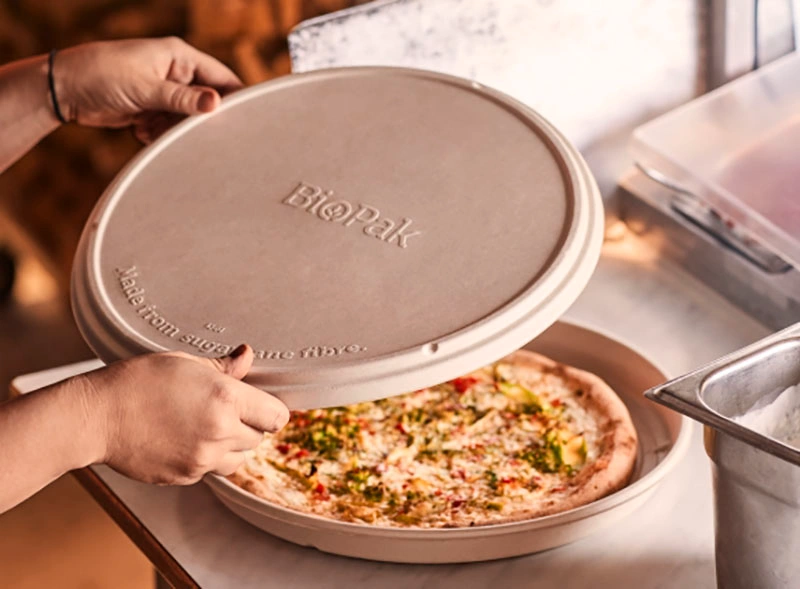
This article will answer your questions
- Which pizza boxes are biodegradable?
- Which pizza boxes are not biodegradable?
- How to choose pizza boxes that meet biodegradability standards?
- How to compost pizza boxes?
- What is the biodegradation process of pizza boxes?
- What are the eco friendly alternatives to pizza boxes?
Which pizza boxes are biodegradable?
Biodegradable pizza boxes decompose into water, carbon dioxide, and organic matter. The corrugated cardboard pizza boxes we commonly see are biodegradable; they are made from plant fiber wood pulp and, under appropriate conditions, can decompose naturally. These pizza boxes are sturdy and durable, suitable for pizzerias and takeaways, and meet sustainability requirements.
Most pizza brands are starting to use biodegradable coatings that are oil and water-resistant and also decompose naturally like cardboard, without causing pollution.

Which pizza boxes are not biodegradable?
Some pizza boxes are not fully biodegradable because they contain plastic coatings or other grease-resistant materials and will persist in the soil. It’s difficult to tell the difference with the naked eye, so it’s best to ask your supplier about the materials used. Below are some common non-biodegradable materials:
| Material | Characteristics | Biodegradable | Influencing Factors |
|---|---|---|---|
| PE Coated Cardboard | Waterproof, oil-resistant | No | Cannot naturally decompose |
| PFAS Coating | Oil-resistant | No | Never degrades |
| Corrugated Cardboard | If there is grease or plastic lining | No | Not suitable for biodegradation overall |
How to choose pizza boxes that meet biodegradable standards?

When choosing pizza boxes that meet biodegradability standards, please note the following points:
Material Composition: Ensure the pizza box is made from biodegradable cardboard or plant-based materials (corn starch); or that it degrades into water and CO₂ within 90 days under home/industrial composting conditions.
Grease-Resistant Coating: Check if an environmentally friendly coating or non-toxic grease-resistant material is used.
Certification: Prioritize products certified by BPI or OK Compost, which demonstrate a biodegradation rate of ≥90%, 100% disintegration (within 12 weeks), and limited heavy metal and PFAS content.
More and more pizza brands are launching environmentally friendly pizza boxes that are made from biodegradable materials and can fully decompose in a composting environment. We at XiangGe Package are also actively responding to this trend and producing biodegradable pizza boxes.
How to compost pizza boxes?
Composting pizza boxes is simple, but you need to make sure the pizza packaging boxes are free of grease and plastic coatings. Here are two common composting methods:
Home composting: Shred the pizza box and mix it with fruits and vegetables in a 1:3 ratio. Maintain a temperature of 55-65℃ and a humidity of 50-60%. Turn the mixture once a week. Decomposition will be complete in 30-90 days.
Industrial composting: The materials are directly sent to a certified facility for forced aeration and high-temperature fermentation, ensuring 100% decomposition and non-toxicity.
Click for more details about when you can compost pizza boxes.
What is the biodegradation process of a pizza box?

The biodegradation of pizza boxes primarily relies on microorganisms converting organic materials into water, carbon dioxide, and humus, a process that takes 30-90 days and can be broadly divided into the following stages:
Initial disintegration (1-2 weeks): Microorganisms (bacteria, fungi) begin to break down the organic matter in the cardboard.
Active degradation (2-8 weeks): The rate of decomposition accelerates, and the cardboard begins to transform into organic matter for the soil, leaving no toxic residue.
Complete decomposition (8-12 weeks): The organic matter in the pizza box is finally completely converted into usable fertilizer, such as carbon dioxide and water.
View detailed requirements for biodegradability rates in different countries and standards.
What are some eco-friendly alternatives to pizza boxes?
Instead of traditional plastic-coated cardboard, you can try the following alternatives:
Plant fiber molded boxes: Such as sugarcane bagasse or bamboo pulp products, 100% compostable, decomposing in 30-90 days under home composting conditions.
Recycled kraft cardboard: Food-grade corrugated cardboard, custom printed, naturally rustic, uses water-based coatings, and is free of PFAS chemicals.
Recycled paper-based packaging: Wheat straw or bamboo fiber cardboard, completely biodegradable.
| Environmental Alternative | Advantages | Challenges |
|---|---|---|
| Plant Fiber Molded Box | Degrades in 30-90 days | High production cost |
| Recycled Kraft Paperboard | Low price | Absorbs oil easily, may be contaminated if food residue remains |
| Recycled Paper-Based Packaging | Good toughness, high stiffness | Lower strength, prone to breakage |
FAQs
Biodegradable pizza boxes decompose completely in 30-90 days under composting conditions. Decomposition time is shorter in industrial facilities than in home composting.
If not managed correctly, composting can indeed attract pests. Removing grease and food scraps before composting, and maintaining proper moisture and aeration in the compost pile, can effectively prevent pest problems.
The unpleasant odor from composting pizza boxes mainly comes from anaerobic decomposition caused by grease residue, which produces hydrogen sulfide and small organic acids, smelling like rotten food. Maintaining good ventilation and moisture helps reduce odors.
Pure natural plant fiber materials, such as sugarcane bagasse, bamboo pulp, or corn starch-based polymers, are 100% biodegradable and can be completely converted into water and carbon dioxide in a composting environment.
Conclusion
Traditional corrugated cardboard pizza boxes are biodegradable, but grease residue can affect their degradation efficiency. New environmentally friendly alternative materials (such as bamboo fiber and rice husk packaging) are also being widely used.
When choosing eco-friendly pizza boxes, try to select materials that are free from grease contamination and support brands that use biodegradable or compostable packaging. Develop proper sorting and composting habits to reduce environmental pollution.
About XiangGe Package
We are committed to providing our customers with premium, eco-friendly, and biodegradable pizza box packaging solutions. Our goal is to offer practical and environmentally conscious packaging options through innovative materials and technologies.
For more information about our eco-friendly packaging solutions or to request samples, please contact XiangGe Package.
Last updated: December 2025
Recommended internal links:
