
Last updated: August 2025 | Estimated reading time: 8 minutes
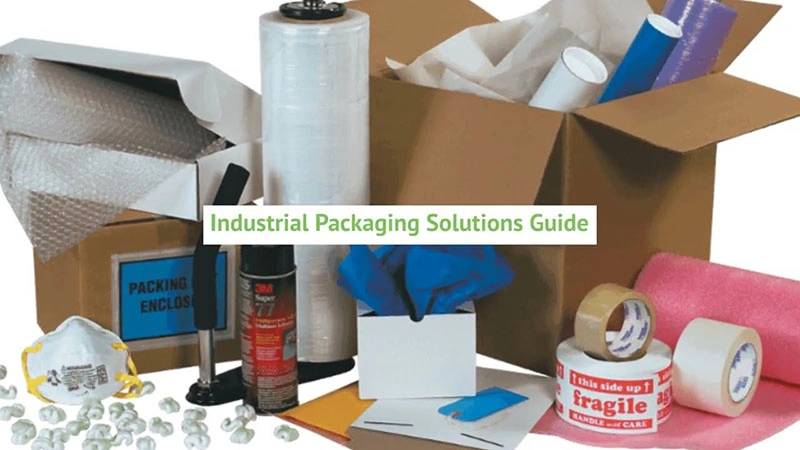
This article will answer your questions
- What is industrial packaging and who needs?
- Why is it important for global shipping and compliance?
- What are the main types of industrial packaging?
- Which packaging types are best for heavy goods?
- What are the materials commonly used in industrial packaging?
- How can industrial packaging ensure safety and compliance?
- How to choose the right packaging for your business?
- The latest sustainable industrial packaging solutions in 2025
What is industrial packaging?
Unlike consumer packaging, industrial packaging focuses on strength, safety, and compliance. For example, electronic products require anti-static packaging for export, and food requires cold chain certified packaging.

Industrial packaging vs. consumer packaging
| Packaging Type | Main Purpose | Typical User | What It Means for You |
|---|---|---|---|
| Consumer packaging | Attract shoppers, convey information | Retail brands | Boost sales |
| Industrial packaging | Protection & compliant transport | Exporters, manufacturers | Avoid damage and returns |
| Secondary / tertiary packaging | Storage & distribution | Wholesalers / distributors | Improve logistics efficiency |
- Before exporting: Confirm whether wooden packaging requires ISPM-15 fumigation certification.
- Heavy cargo transportation: Avoid using E-flute cardboard with thin hardness, and choose B-flute or BC double-flute.
Why is industrial packaging important for global shipping?
Proper industrial packaging ensures safe product transport, adapts to complex transportation environments (air, sea, rail, truck, etc.), and improves transportation efficiency. It eliminates the need for repackaging and allows for direct stacking and storage. This one-stop packaging solution helps your company save on transportation costs and the possibility of compensation.
Well-designed dimensions can increase pallet utilization by 15%, and reinforced corrugated boxes can also reduce box collapse during sea transportation.
What are the main types of industrial packaging?

Corrugated transport boxes – good cushioning and pressure resistance, suitable for cross-border e-commerce and full container exports
Plywood/Wooden Crates – Suitable for large machinery and heavy goods, especially pallets and wooden crates for export
- Iron barrel/plastic barrel – strong pressure resistance, suitable for chemicals, liquids, and powders
- IBC ton barrels / FIBC ton bags – suitable for powders, grains, and bulk raw materials
- Anti-static packaging – chips, electronic components
- Cold chain packaging – food, pharmaceuticals
Which packaging types are best for heavy goods?

| Packaging Form | Strength Level | Application Scenario | What It Means for You |
|---|---|---|---|
| BC flute corrugated box | Medium-High | Export cartons | Balance between cost and safety |
| Plywood crate | Very High | Heavy machinery | Prevent collapse during transport |
| Steel drum | Extreme | Chemicals, oils | Long-term safe storage |
What are the materials commonly used in industrial packaging?
- Corrugated cardboard – high strength, light weight, low cost, and flexible customization
- Plywood – High strength, meets export regulations
- Plastic (PP/PE) – waterproof, moisture-proof, suitable for cold chain
- Metal (steel/aluminum) – durable and corrosion-resistant
- Environmentally friendly paper and biodegradable film – meeting sustainable needs
How can industrial packaging ensure safety and compliance?

Moisture-proof treatment – PE coating, moisture-proof bag, desiccant, easy to carry and stack.
Compliance certifications – ISPM-15, FDA/EU food grade, FSC paper.
Digital tracking – QR code printed on packaging, batch traceability.
Clear labeling – marking packaging specifications, hazardous materials identification, and recycling information.
How to choose suitable industrial packaging?
- Product attributes: Consider product weight, fragility, shape, and whether it needs to be moisture-proof or anti-static to determine the packaging type and material.
- Transportation method: Consider the humidity, temperature changes and stacking height during transportation, so that the packaging factory can design a reasonable structure.
- Exporting country regulations: Dangerous goods packaging, food grade certification, and wood fumigation requirements.
- Strength testing: drop, stacking, and vibration tests, and ask the factory to provide corresponding test reports.
- Budget: Under the premise of ensuring safety, rationally optimize the overall design plan and avoid excessive packaging.
The latest sustainable packaging solutions in 2025
Sustainable packaging will become a necessity in 2025, with many importing countries explicitly requiring the use of recyclable or biodegradable materials.
Environmentally friendly adhesive. Use solvent-free, water-based and biodegradable adhesive
Compostable and bio-based. Packaging made from corn starch and sugar cane promotes natural decomposition.
Reusable pallets/turnaround boxes. Reduce disposable packaging waste.
Lightweight packaging design reduces transportation carbon emissions.
FAQs
Consumer packaging is aimed at retail users, focusing on aesthetics and user experience; industrial packaging is aimed at transportation compliance and protection.
BC corrugated boxes are used for general goods, and plywood boxes are used for heavy or precision equipment.
Through standardized dimensions, modular design, and optimized dimensions, the loading rate can be increased and cargo damage compensation can be reduced.
Conclusion
- The value of industrial packaging = compliance + efficiency + trust
- Choose appropriate packaging based on product, mode of transport, and regulations
- Strength and moisture-proof tests must be done before export
- Sustainable solutions are essential to staying competitive in 2025
Next step: Check your export packaging for compliance and conduct a trial fit or drop test. This can help avoid costly losses.
About XiangGe Package
We are XiangGe Package, a B2B packaging manufacturer with over 10 years of export experience.
- Serving customers: 100+ countries around the world, covering industries such as cosmetics, electronics, electrical appliances, food, and clothing.
- Certifications: FSC, ISPM-15, FDA, EU food grade.
👉 Contact us now to get free samples or consult industrial packaging solutions.
Last updated: August 2025
Recommended internal links:
